
Can a Student Apply for SRD Grant to Cover Educational Expenses?
The SRD grant was introduced in 2020, right after South Africa’s first COVID-19 lockdown. Many people lost their income and struggled to meet daily needs. With markets closed and movement restricted, it became hard for families to survive.
To help, the government introduced the R350 grant. This payment aimed to provide some financial support to people who had no other income during that time.
However, the grant is not for students but for those who are unemployed or have very little income to survive. But in this guide, I will share my thoughts on this topic and give you a better alternative.
Why SRD Grant Not For Educational Expenses?
The SRD grant was created to help people who have no income or very little money to survive. It is meant for daily needs like food, rent, and basic living costs. Because of this, students cannot apply for the SRD grant just to cover school or university expenses.
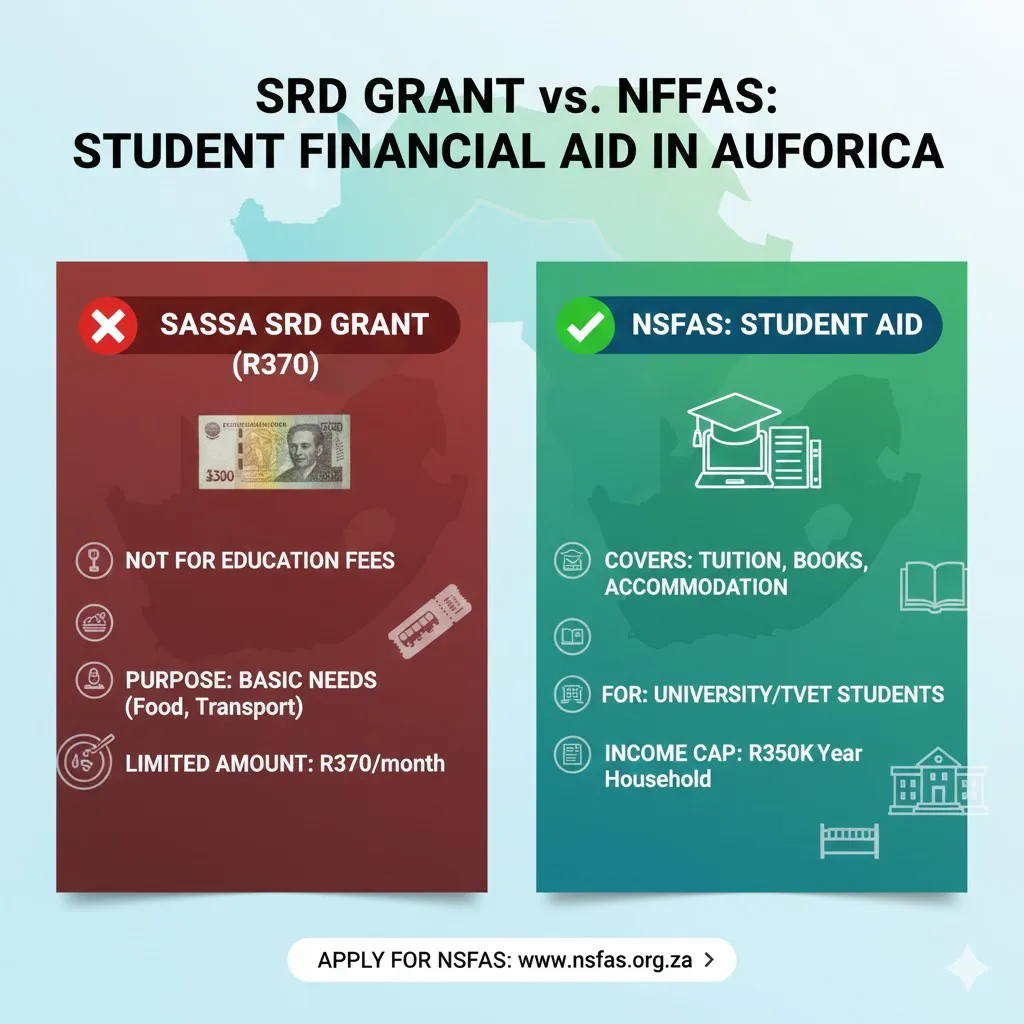
Even if a student is struggling with tuition or school fees, the SRD grant is not designed for educational purposes.
However, students in South Africa do have another option. They can apply for NSFAS (National Student Financial Aid Scheme). NSFAS helps students with tuition, books, and other study-related costs. To qualify, your yearly household income must be R350,000 or less. This means that if your family earns within this limit, you can get financial help to study.
NSFAS is available for students who are doing Grade 12 and want to continue to higher education, or for those who have already finished Grade 12 and plan to attend university or college. Unlike the SRD grant, NSFAS is focused on education, so it can cover tuition fees, accommodation, and other school-related expenses.
How to Apply for NSFAS?
Applying for NSFAS is easy if you follow the steps carefully. NSFAS (National Student Financial Aid Scheme) helps students with tuition fees, books, and other study costs. Here is a step-by-step guide to make the process simple.
Step 1: Visit the NSFAS Website
First, go to the official website at www.nsfas.org.za. This is where you will create your account and submit your application. Make sure you are using a device with internet access.
Step 2: Create an Account
To apply, you need an NSFAS account. Click on the “Register” button on the homepage. You will be asked to provide your South African ID number, a valid email address, and your mobile number. Make sure your email and phone number are active because you will need them to verify your account.
Step 3: Verify Your Details
After entering your information, NSFAS will send an OTP (One-Time Password) to your email and phone number. Enter these codes to verify your account. This step ensures that your contact information is correct and secure.
Step 4: Log in to Your Account
Once your account is verified, log in using your ID number and password. You will now be taken to your NSFAS dashboard.
Step 5: Start Your Application
On the dashboard, look for the “Apply” button. Click on it to start your application. You will be asked to fill in your personal details, including your academic information and school or university details.
Step 6: Provide Household Income Information
NSFAS needs to know about your family’s financial situation. Fill in details about your household income, including salaries, allowances, or any other sources of income. Make sure all information is accurate, as NSFAS may check your documents later.
Step 7: Submit Your Application
After completing all the sections, review your application carefully. Check that your personal information, academic records, and household income are correct. Once you are sure, click on the “Submit” button.
After submitting, you will receive a confirmation email. NSFAS will review your application and let you know if you qualify for funding. Keep checking your email and dashboard for updates.
Applying for NSFAS does not take long if you prepare your documents and information in advance. Remember, NSFAS is only for students whose household income is R350,000 or less per year, so make sure you meet the requirements before applying.
Check Your NSFAS Status to Know About Approval
After submitting your NSFAS application, you can check its status online. Visit the official NSFAS website at www.nsfas.org.za. On the homepage, look for the “Check Your Application Status” option. You will need to enter your application number and your South African ID number.
Once entered, the system will show whether your application is approved, still under review, or declined. Checking your status regularly helps you stay updated and take any next steps if needed. Make sure to use only the official website to avoid scams.


